Post Page Advertisement [Top]

 Prerana is an experiential learning program, a pioneering national initiative of the Department of School Education & Literacy, Ministry of Education, that has successfully completed its first cycle, marking a significant milestone in India’s journey towards value-based, experiential education.
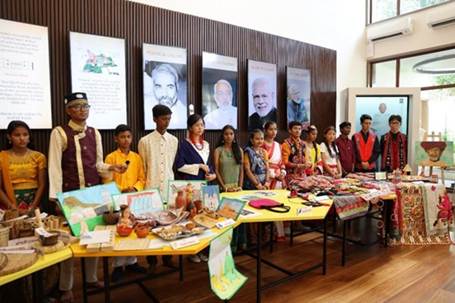
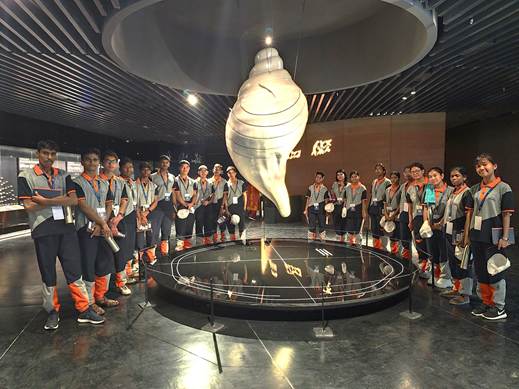
The program, inspired by the vision of the Prime Minister Shri Narendra Modi, commenced on 15th January 2024 and is being conducted at the historic Vernacular School in Vadnagar, established in 1888, the very institution where the Prime Minister began his educational journey.

Prerana is hosted at the Prerana Sankul, a unique space where history meets innovation and tradition is seamlessly woven into a future-focused educational experience. The Prerana Sankul was dedicated to the nation on 16 January 2025 by the Union Home Minister and Minister of Cooperation Shri Amit Shah, in the presence of Union Education Minister Shri Dharmendra Pradhan and Chief Minister of Gujarat Shri Bhupendrabhai Patel.
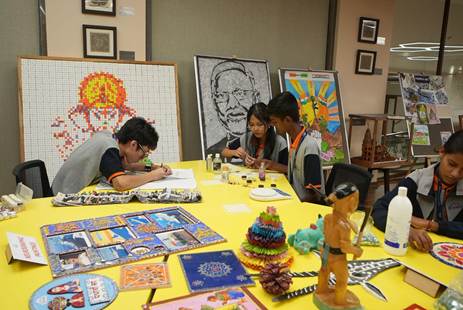
Each weekly batch of Prerana comprises 20 students, one boy and one girl from each of 10 districts across 10 different States/Union Territories, accompanied by Lady Guardian Teachers, ensuring balanced gender representation and inclusive participation from across the country. The first cycle witnessed the successful completion of 81 batches, involving a total of 1,620 students and 810 Guardian Teachers, representing all 785 districts of India.

The participants engaged deeply with Prerana’s nine core human values: Swabhiman aur Vinay; Shaurya aur Sahas; Parishram aur Samarpan; Satyanishtha aur Shuchita; Karuna aur Sewa; Navachar aur Jigyasa; Vividhta aur Ekta; Shraddha aur Vishwas; and Swatantrata aur Kartavya. The program was delivered under the guidance of teachers from Kendriya Vidyalayas and Jawahar Navodaya Vidyalayas, trained by experts from leading institutions, including IIT Gandhinagar, IIM Ahmedabad, and the Indian Knowledge Systems (IKS) Division, among others.

​Through storytelling, heritage immersion, indigenous games, collaborative reflection, and hands-on experiential activities, students developed confidence, teamwork, leadership qualities, and a strong sense of social responsibility. The Prerana Alumni Network, supported through the Prerana Alumni Portal, continues to foster connection, peer mentorship, and knowledge-sharing, sustaining the ethos of Prerana well beyond the residential experience.

Building on the success of the first cycle, the second cycle of Prerana is scheduled to commence in April 2026. Drawing from the operational learnings of experiential education, Prerana Utsav is being organised across schools in all States and Union Territories. Serving as the gateway to the Prerana Program, Prerana Utsav ensures inclusive outreach and enables talented students from diverse backgrounds to be identified and nominated for participation.
The upcoming cycle aims to further promote value-based learning, expand opportunities for student leadership, and deepen engagement with Indian Knowledge Systems, cultural heritage, and experiential pedagogy. With an expanding alumni base, a strengthened mentorship ecosystem, and enhanced district-level participation, Prerana is poised to inspire young learners, nurture civic responsibility, and deepen their commitment to nation-building, thereby advancing the collective national vision of Viksit Bharat 2047.


*****

Read more ...

 The Vice-President of India, Shri C. P. Radhakrishnan, addressed the 9th Convocation of Jawaharlal Nehru University in New Delhi today, congratulated the graduating students and urged them to dedicate their knowledge and skills to the service of the nation.

Recalling the teachings of Swami Vivekananda on his birth anniversary, the Vice-President said education must go beyond degrees to build character, strengthen intellect and empower individuals to stand on their own feet. He emphasised that education and proper training alone would enable India’s youth to realise Prime Minister Shri Narendra Modi’s vision of a Viksit Bharat @2047.

The Vice-President stressed that modern science and traditional values must grow together. Referring to the democratic ethos of JNU, the Vice-President said debate, discussion, dissent and even confrontation are essential elements of a healthy democracy. However, he added that such processes must ultimately lead to a conclusion. Once a decision is taken, he emphasised, there must be a collective willingness to cooperate in its implementation to ensure smooth and effective administration.

Read here - https://www.pib.gov.in/PressReleasePage.aspx?PRID=2212912&reg=3&lang=1

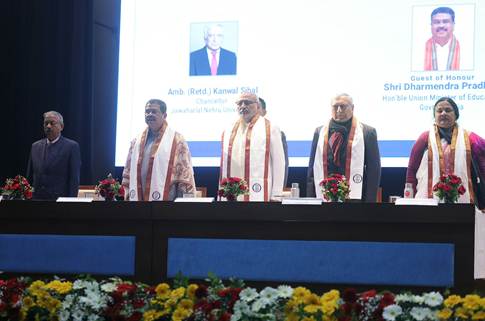
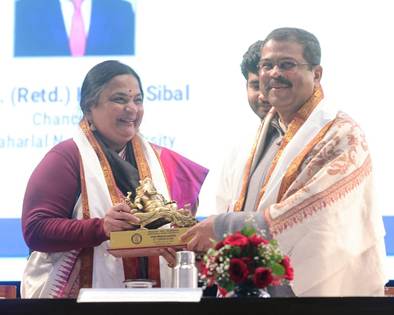
While addressing the gathering, Shri Pradhan said that it is a matter of privilege to attend the Convocation Ceremony in the august presence of the Vice President of India, Shri C. P. Radhakrishnan. He extended his best wishes to all the students conferred with degrees and medals.

He stated that through decades of sustained academic contribution, JNU has built a strong and distinctive legacy of academic excellence and continues to remain among the country’s premier universities by upholding academic autonomy within a vibrant interdisciplinary ecosystem, where critical thinking forms the core of its ethos.

The Minister emphasized that the graduating students are expected to uphold and further strengthen JNU’s legacy of inclusivity, social justice, and responsibility, serve as the voice of the marginalized, and actively contribute to reducing inequalities in society.

He underlined that JNU graduates would play a decisive role in nation-building. He said that many would drive innovation and entrepreneurship by building start-ups and unicorns, while several would shape the nation’s intellectual discourse as writers, journalists, and thought leaders. He affirmed that the nation expects them to make an active, positive, and meaningful contribution towards realizing the Prime Minister Shri Narendra Modi’s vision of Viksit Bharat – 2047.

Union Minister for Education Shri Dharmendra Pradhan, Chancellor of Jawaharlal Nehru University Shri Kanwal Sibal, Vice-Chancellor of Jawaharlal Nehru University Prof. Santishree Dhulipudi Pandit, senior officials, faculty members, graduating students and their families were present at the event.

*****

Read more ...

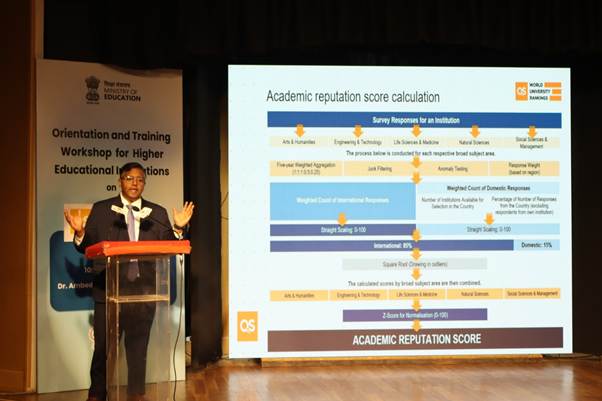
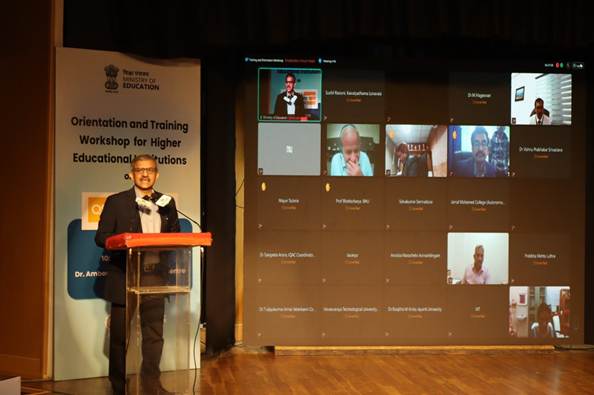
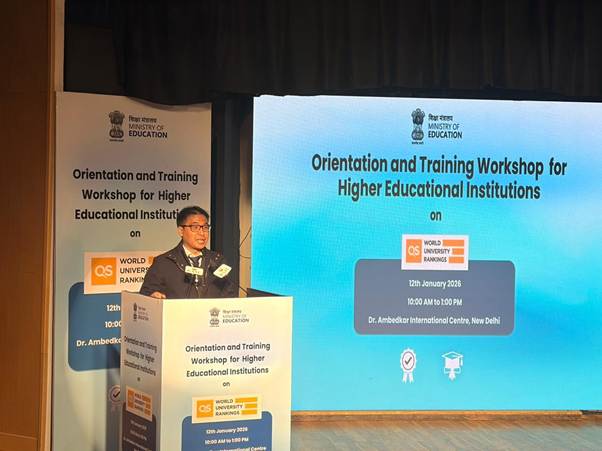
 As part of ongoing efforts to enhance the global visibility and performance of Indian Higher Educational Institutions (HEIs), the Ministry of Education organised a half-day Orientation and Training Workshop for Vice-Chancellors and Nodal Officers of HEIs on the QS World University Rankings. The workshop was conducted by QS Quacquarelli Symonds and aimed at improving institutional understanding of global ranking parameters, best practices, and strategic pathways, in alignment with the objectives of the National Education Policy (NEP) 2020.

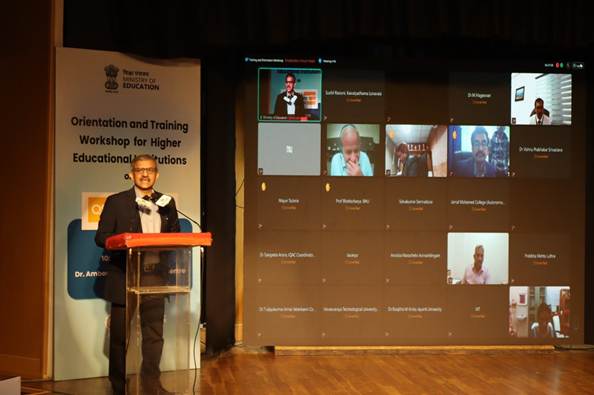
The workshop witnessed wide participation from Central, State, and Private Universities, including autonomous institutions across the country. Approximately 400 participants joined the programme in online mode, while over 60 participants attended the in-person session held at Dr. Ambedkar International Centre, New Delhi.

Addressing the gathering, Dr. Vineet Joshi, Secretary (Higher Education), emphasised the importance of global benchmarking and international recognition for Indian universities. He appreciated the initiative and encouraged HEIs to actively engage with global ranking frameworks to strengthen their academic reputation and global standing.

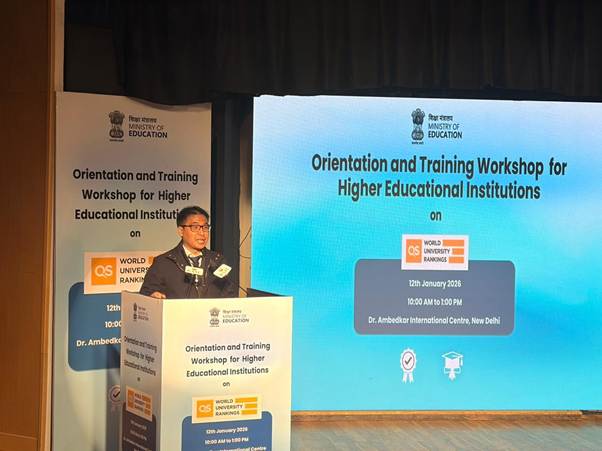
Mr. Armstrong Pame, Joint Secretary, Ministry of Education, provided an overview of the Ministry’s internationalisation initiatives, including SPARC, supernumerary seats for international students, and the Study in India (SII) portal. He highlighted the need for enhanced global visibility, noting that internationalisation-related indicators contribute significantly to global ranking outcomes. He encouraged institutions to focus on international student engagement, faculty development programmes, long-term academic collaborations, and improved institutional outreach.

The workshop was conducted in two sessions by Dr. Ashwin Fernandes, Executive Director (AMESA), QS Quacquarelli Symonds. The first session focused on the QS ranking methodology, eligibility criteria, and multiple entry points for institutional visibility through world, subject, regional, business, and sustainability rankings, along with guidance on data submission through the QS Hub.


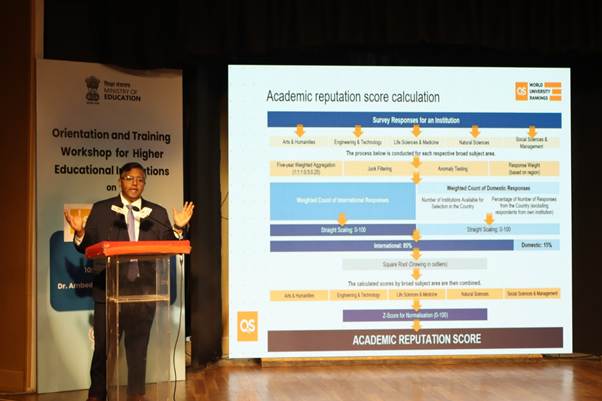
The second session provided an in-depth discussion on the research impact and reputation indicators, including academic and employer reputation surveys conducted annually by QS, and strategies for improving research visibility and citation performance.

The Indian HEIs have significantly strengthened their presence in the QS World University Rankings, with a record 54 institutions ranked in the 2026 edition, compared to only 12 institutions in 2014.  This steady upward trajectory reflects India’s growing global academic visibility and performance.  While these achievements are noteworthy, several initiatives are required to be taken up, particularly in areas such as internationalisation (international students and faculty), research citations per faculty, and faculty-student ratios, which carry substantial weight in the Ranking methodology. Therefore, workshops such as this play a critical role in addressing these gaps by strengthening institutional capacity and advancing India’s collective efforts towards global academic excellence.

*****


Read more ...

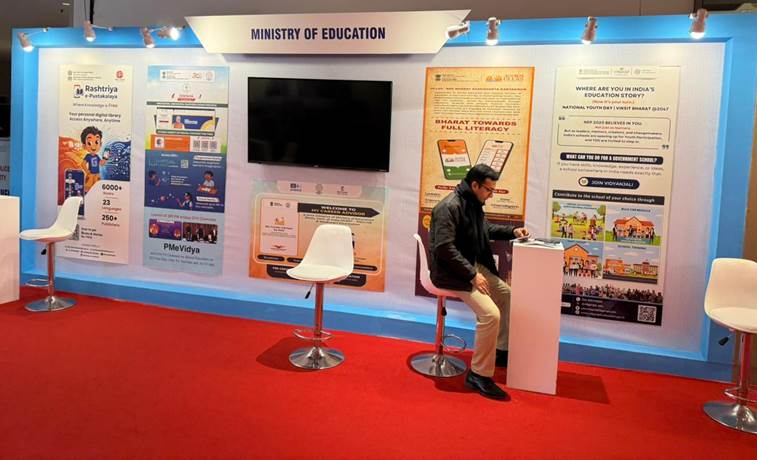
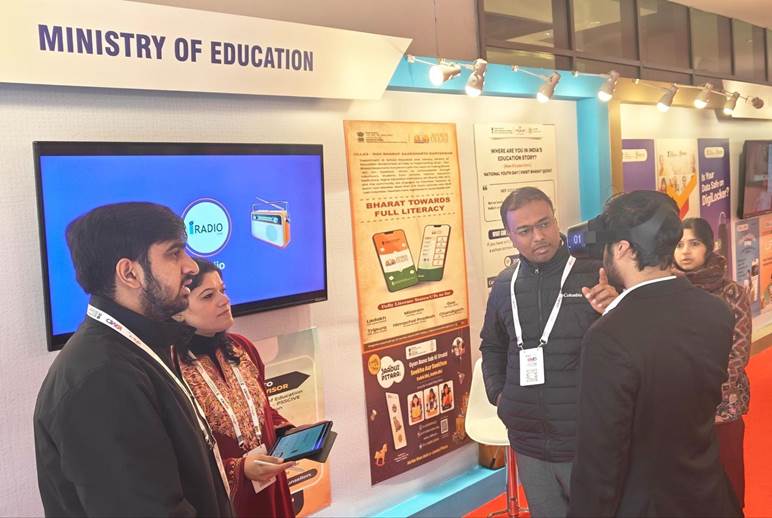
 The National Youth Festival (NYF) 2026 is currently being held from 9th to 12th January 2026 at Bharat Mandapam, New Delhi, celebrating the spirit, innovation, and aspirations of India’s youth. The festival is serving as a vibrant platform to showcase key education and skill-development initiatives of the Ministry of Education, Government of India, aligned with the vision of the National Education Policy 2020.

​A major highlight of NYF 2026 is the Rashtriya e-Pustakalaya, which is providing youth with access to a rich digital repository of books and learning resources. DIKSHA, along with Virtual Labs and Augmented Reality (AR) solutions, is demonstrating immersive, technology-enabled learning experiences that enhance conceptual understanding and practical skills.

​The PM eVidya initiative is being showcased as an integrated digital education platform that ensures equitable access to quality learning through online/on-air, digital, and broadcast modes. Career readiness and skill development are being promoted through digital initiatives, the My Career Advisor app, which guides youth towards informed career choices and employability.

​The festival also emphasizes lifelong learning through ULLAS (Understanding Lifelong Learning for All in Society), encouraging adult education through community involvement.  Foundational learning is being strengthened through e-Jaadui Pitara, which offers joyful, play-based digital content for caregivers of young learners at the Foundational stage.

​Additionally, Vidyanjali - the online school volunteer initiative of the Department of School Education & Literacy, Ministry of Education, is being showcased as a key platform for youth, school alumni, professionals, institutions, and the community to actively participate as volunteers and contribute to enhancing learning in government schools. Vidyanjali portal enables volunteers to connect to government schools and share their skills, knowledge, and resources in strengthening school education through community participation, CSR involvement, and mentorship.

​Through these initiatives, NYF 2026 is actively reinforcing India’s commitment to inclusive, technology-driven, and future-ready education for its youth and helping to realize the goals of NEP-2020.

*****

Read more ...

 As part of ongoing efforts to enhance the global visibility and performance of Indian Higher Educational Institutions (HEIs), the Ministry of Education organised a half-day Orientation and Training Workshop for Vice-Chancellors and Nodal Officers of HEIs on the QS World University Rankings. The workshop was conducted by QS Quacquarelli Symonds and aimed at improving institutional understanding of global ranking parameters, best practices, and strategic pathways, in alignment with the objectives of the National Education Policy (NEP) 2020.

The workshop witnessed wide participation from Central, State, and Private Universities, including autonomous institutions across the country. Approximately 400 participants joined the programme in online mode, while over 60 participants attended the in-person session held at Dr. Ambedkar International Centre, New Delhi.

Addressing the gathering, Dr. Vineet Joshi, Secretary (Higher Education), emphasised the importance of global benchmarking and international recognition for Indian universities. He appreciated the initiative and encouraged HEIs to actively engage with global ranking frameworks to strengthen their academic reputation and global standing.

Mr. Armstrong Pame, Joint Secretary, Ministry of Education, provided an overview of the Ministry’s internationalisation initiatives, including SPARC, supernumerary seats for international students, and the Study in India (SII) portal. He highlighted the need for enhanced global visibility, noting that internationalisation-related indicators contribute significantly to global ranking outcomes. He encouraged institutions to focus on international student engagement, faculty development programmes, long-term academic collaborations, and improved institutional outreach.

The workshop was conducted in two sessions by Dr. Ashwin Fernandes, Executive Director (AMESA), QS Quacquarelli Symonds. The first session focused on the QS ranking methodology, eligibility criteria, and multiple entry points for institutional visibility through world, subject, regional, business, and sustainability rankings, along with guidance on data submission through the QS Hub.

The second session provided an in-depth discussion on the research impact and reputation indicators, including academic and employer reputation surveys conducted annually by QS, and strategies for improving research visibility and citation performance.

The Indian HEIs have significantly strengthened their presence in the QS World University Rankings, with a record 54 institutions ranked in the 2026 edition, compared to only 12 institutions in 2014.  This steady upward trajectory reflects India’s growing global academic visibility and performance.  While these achievements are noteworthy, several initiatives are required to be taken up, particularly in areas such as internationalisation (international students and faculty), research citations per faculty, and faculty-student ratios, which carry substantial weight in the Ranking methodology. Therefore, workshops such as this play a critical role in addressing these gaps by strengthening institutional capacity and advancing India’s collective efforts towards global academic excellence.

*****

Read more ...

Meetings

 A meeting is a structured gathering of individuals who come together to discuss ideas, share information, make decisions, or solve problems. Meetings are a fundamental component of organizational communication and coordination, serving as essential tools for planning, collaboration, and decision-making across academic institutions, businesses, nonprofits, and government bodies. Whether formal or informal, in-person or virtual, meetings help align teams, clarify objectives, and ensure collective progress. 


At its core, a meeting provides a dedicated space for dialogue and exchange. Participants share updates, present findings, evaluate challenges, and propose solutions. This collective communication fosters transparency, strengthens relationships, and ensures that everyone involved understands the goals, expectations, and next steps. Regular meetings also promote accountability as members review their contributions and plan future actions.

Meetings come in various forms depending on their purpose. Staff meetings help teams coordinate ongoing tasks, while board meetings focus on high-level governance and strategy. Project meetings track progress, allocate responsibilities, and troubleshoot obstacles. Academic meetings, such as departmental reviews or research team discussions, encourage knowledge sharing and collaborative inquiry. Client meetings and stakeholder consultations foster relationship-building and ensure alignment with project objectives.

One of the key strengths of meetings is their ability to facilitate real-time communication. Unlike emails or written reports, meetings allow participants to ask questions immediately, clarify misunderstandings, and discuss ideas interactively. This immediacy leads to quicker decision-making and more efficient problem resolution. Meetings also help identify issues early, preventing small concerns from escalating into major challenges.

Effective meetings rely on strong planning and facilitation. A clear agenda outlining topics, responsibilities, and time allocations helps maintain focus and productivity. The role of the meeting leader or facilitator is crucial; they guide discussions, encourage participation, manage time, and ensure that objectives are met. Good facilitation promotes respectful dialogue, prevents domination by any single participant, and ensures that diverse perspectives are heard.

Visual aids and digital tools enhance the effectiveness of meetings. Presentations, charts, dashboards, and collaborative documents help organize information and support decision-making. With the rise of digital technology, virtual meetings have become an integral part of modern communication. Platforms such as Zoom, Microsoft Teams, and Google Meet allow participants to connect remotely, share screens, record discussions, and work together in real time. Virtual meetings provide flexibility, reduce travel costs, and enable global collaboration.

Hybrid meetings, which combine physical and virtual participation, further expand accessibility and ensure that no one is excluded due to geographic or logistical constraints. These formats require careful coordination but offer a balanced approach to inclusivity and engagement.

However, meetings must be used wisely. Poorly structured or unnecessary meetings can waste time and drain energy. To remain effective, meetings should have clear objectives, relevant participants, concise agendas, and action-oriented outcomes. Follow-up emails or minutes help document decisions, assign responsibilities, and track progress.

In conclusion, meetings are essential mechanisms for communication, collaboration, and coordinated action. They bring people together to exchange ideas, resolve issues, and make informed decisions. When thoughtfully planned and effectively managed, meetings enhance productivity, strengthen teamwork, and contribute meaningfully to organizational and academic success.

Read more ...

Conclave

 A conclave is a high-level gathering of experts, leaders, policymakers, and professionals who come together to engage in focused discussions, strategic deliberations, and collaborative decision-making on important themes or emerging issues. Unlike general conferences that cover broad domains, a conclave is more exclusive, curated, and purpose-driven. It aims to generate actionable insights, foster meaningful dialogue, and shape the future direction of a specific field, sector, or policy area. 


At its core, a conclave serves as a platform for thought leadership. Participants—often senior stakeholders, innovators, researchers, and industry representatives—share perspectives, present findings, and debate solutions to pressing challenges. The closed or semi-exclusive nature of a conclave allows for deeper, more candid discussions and encourages participants to engage openly without the constraints typical of large public events. This atmosphere of trust and expertise helps produce high-quality outcomes and visionary recommendations.

Conclaves are commonly organized around themes such as education reform, sustainable development, digital transformation, public policy, entrepreneurship, healthcare, security, or climate change. Each session is typically structured to maximize interaction and strategic thinking. Formats may include keynote addresses, expert panels, roundtable discussions, fireside chats, and moderated dialogues. These formats help illuminate different viewpoints and foster collaborative problem-solving.

One of the distinguishing features of a conclave is its emphasis on networking among influential stakeholders. Because participants are carefully selected, the event becomes a hub for meaningful connections between key decision-makers. These interactions often lead to partnerships, research collaborations, policy frameworks, and long-term initiatives that continue beyond the conclave itself. For institutions or organizations, hosting or participating in a conclave enhances visibility, credibility, and strategic influence.

Conclaves also play a significant role in policy formulation and institutional development. Insights generated during discussions may contribute to white papers, strategic plans, or policy recommendations. Governments, academic bodies, and corporate institutions increasingly rely on conclaves to gather expert input, test new ideas, and identify opportunities for innovation. This consultative approach enriches decision-making and promotes evidence-based solutions.

In the corporate world, conclaves serve as platforms for leadership visioning, market analysis, and industry forecasting. Organizations use these gatherings to align their strategies, understand emerging trends, and prepare for future challenges. For startups and entrepreneurs, business conclaves offer exposure to investors, mentors, and innovators, creating a fertile environment for growth and ideation.

The rise of digital technologies has given birth to virtual and hybrid conclaves, expanding access while retaining the exclusivity and depth of traditional gatherings. Virtual conclaves connect participants from across the globe, encouraging international collaboration and diversified insights. Hybrid formats combine physical interaction with online participation, ensuring flexibility and inclusivity without compromising quality.

Effective conclave planning requires careful curation of topics, speakers, and participants. The environment should encourage open dialogue, mutual respect, and forward-thinking exploration. High-quality documentation—such as reports, briefs, or published proceedings—helps preserve insights and extend the impact of the event.

In conclusion, a conclave is a distinguished forum for strategic dialogue, expert exchange, and collaborative innovation. By bringing together influential voices and fostering deep, focused conversations, conclaves shape policies, inspire new ideas, and drive meaningful change across sectors. Whether organized physically, virtually, or in hybrid mode, conclaves remain powerful catalysts for leadership, knowledge creation, and future-oriented decision-making.

Read more ...

Latest Posts

5/recent/post-list