Post Page Advertisement [Top]

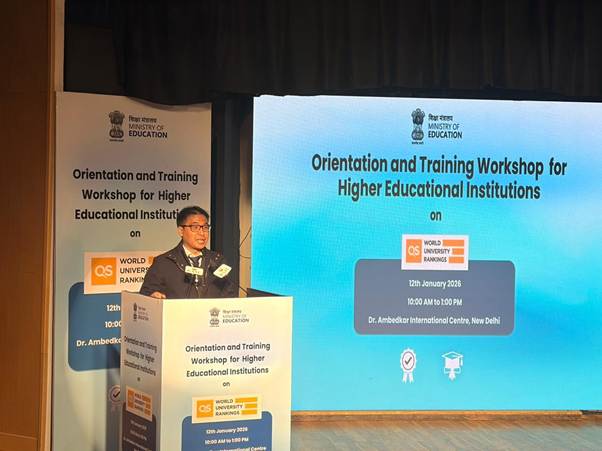
 As part of ongoing efforts to enhance the global visibility and performance of Indian Higher Educational Institutions (HEIs), the Ministry of Education organised a half-day Orientation and Training Workshop for Vice-Chancellors and Nodal Officers of HEIs on the QS World University Rankings. The workshop was conducted by QS Quacquarelli Symonds and aimed at improving institutional understanding of global ranking parameters, best practices, and strategic pathways, in alignment with the objectives of the National Education Policy (NEP) 2020.

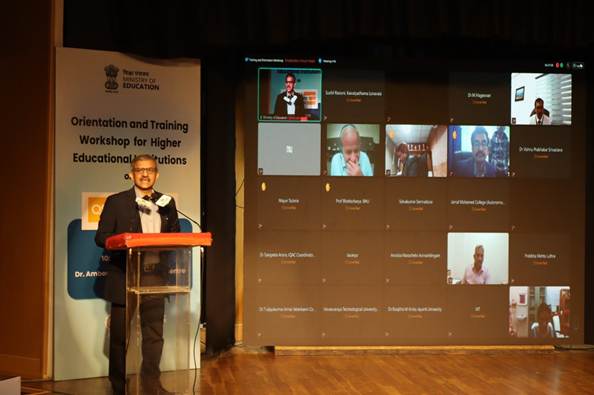
The workshop witnessed wide participation from Central, State, and Private Universities, including autonomous institutions across the country. Approximately 400 participants joined the programme in online mode, while over 60 participants attended the in-person session held at Dr. Ambedkar International Centre, New Delhi.
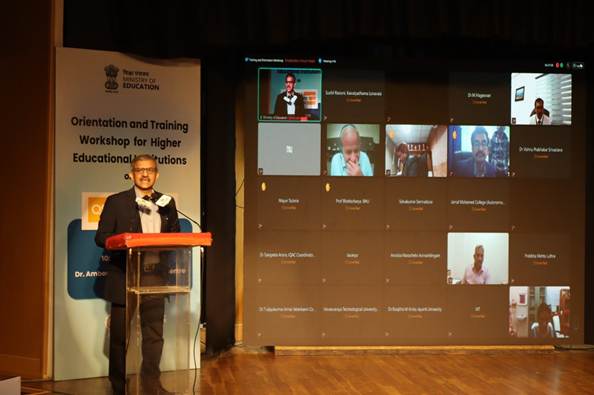
Addressing the gathering, Dr. Vineet Joshi, Secretary (Higher Education), emphasised the importance of global benchmarking and international recognition for Indian universities. He appreciated the initiative and encouraged HEIs to actively engage with global ranking frameworks to strengthen their academic reputation and global standing.

Mr. Armstrong Pame, Joint Secretary, Ministry of Education, provided an overview of the Ministry’s internationalisation initiatives, including SPARC, supernumerary seats for international students, and the Study in India (SII) portal. He highlighted the need for enhanced global visibility, noting that internationalisation-related indicators contribute significantly to global ranking outcomes. He encouraged institutions to focus on international student engagement, faculty development programmes, long-term academic collaborations, and improved institutional outreach.
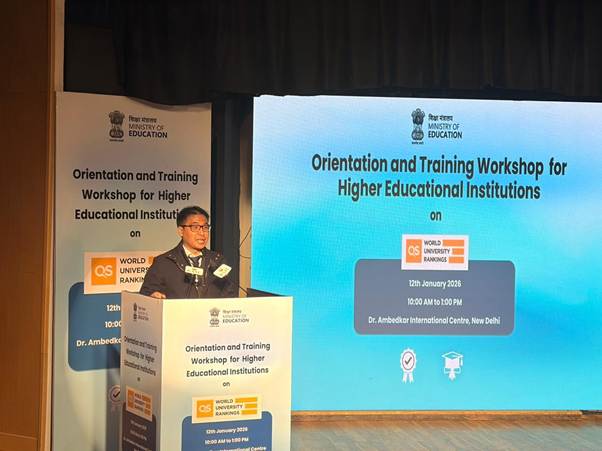
The workshop was conducted in two sessions by Dr. Ashwin Fernandes, Executive Director (AMESA), QS Quacquarelli Symonds. The first session focused on the QS ranking methodology, eligibility criteria, and multiple entry points for institutional visibility through world, subject, regional, business, and sustainability rankings, along with guidance on data submission through the QS Hub.
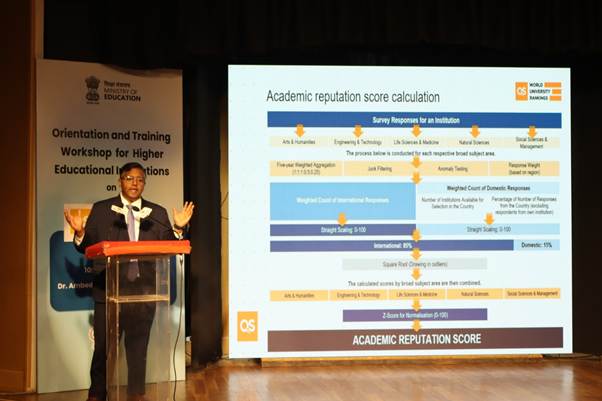
 

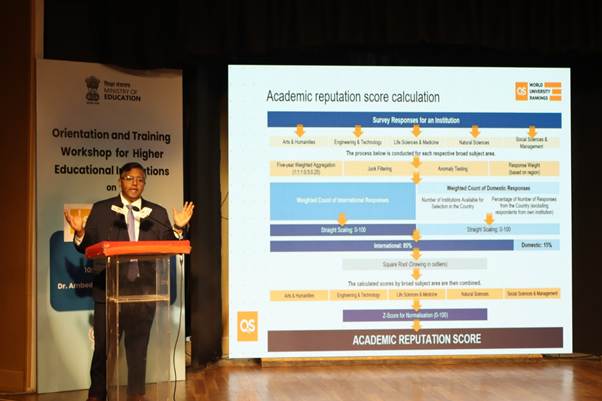
The second session provided an in-depth discussion on the research impact and reputation indicators, including academic and employer reputation surveys conducted annually by QS, and strategies for improving research visibility and citation performance.

The Indian HEIs have significantly strengthened their presence in the QS World University Rankings, with a record 54 institutions ranked in the 2026 edition, compared to only 12 institutions in 2014.  This steady upward trajectory reflects India’s growing global academic visibility and performance.  While these achievements are noteworthy, several initiatives are required to be taken up, particularly in areas such as internationalisation (international students and faculty), research citations per faculty, and faculty-student ratios, which carry substantial weight in the Ranking methodology. Therefore, workshops such as this play a critical role in addressing these gaps by strengthening institutional capacity and advancing India’s collective efforts towards global academic excellence.

*****


Read more ...

 As part of ongoing efforts to enhance the global visibility and performance of Indian Higher Educational Institutions (HEIs), the Ministry of Education organised a half-day Orientation and Training Workshop for Vice-Chancellors and Nodal Officers of HEIs on the QS World University Rankings. The workshop was conducted by QS Quacquarelli Symonds and aimed at improving institutional understanding of global ranking parameters, best practices, and strategic pathways, in alignment with the objectives of the National Education Policy (NEP) 2020.

The workshop witnessed wide participation from Central, State, and Private Universities, including autonomous institutions across the country. Approximately 400 participants joined the programme in online mode, while over 60 participants attended the in-person session held at Dr. Ambedkar International Centre, New Delhi.

Addressing the gathering, Dr. Vineet Joshi, Secretary (Higher Education), emphasised the importance of global benchmarking and international recognition for Indian universities. He appreciated the initiative and encouraged HEIs to actively engage with global ranking frameworks to strengthen their academic reputation and global standing.

Mr. Armstrong Pame, Joint Secretary, Ministry of Education, provided an overview of the Ministry’s internationalisation initiatives, including SPARC, supernumerary seats for international students, and the Study in India (SII) portal. He highlighted the need for enhanced global visibility, noting that internationalisation-related indicators contribute significantly to global ranking outcomes. He encouraged institutions to focus on international student engagement, faculty development programmes, long-term academic collaborations, and improved institutional outreach.

The workshop was conducted in two sessions by Dr. Ashwin Fernandes, Executive Director (AMESA), QS Quacquarelli Symonds. The first session focused on the QS ranking methodology, eligibility criteria, and multiple entry points for institutional visibility through world, subject, regional, business, and sustainability rankings, along with guidance on data submission through the QS Hub.

The second session provided an in-depth discussion on the research impact and reputation indicators, including academic and employer reputation surveys conducted annually by QS, and strategies for improving research visibility and citation performance.

The Indian HEIs have significantly strengthened their presence in the QS World University Rankings, with a record 54 institutions ranked in the 2026 edition, compared to only 12 institutions in 2014.  This steady upward trajectory reflects India’s growing global academic visibility and performance.  While these achievements are noteworthy, several initiatives are required to be taken up, particularly in areas such as internationalisation (international students and faculty), research citations per faculty, and faculty-student ratios, which carry substantial weight in the Ranking methodology. Therefore, workshops such as this play a critical role in addressing these gaps by strengthening institutional capacity and advancing India’s collective efforts towards global academic excellence.

*****
Read more ...

 A workshop is an interactive educational session where participants actively engage in learning by doing. Workshops are designed to teach or enhance skills by allowing participants to work directly on tasks as they learn. These sessions are highly practical and are often used to impart technical knowledge, professional skills, or creative techniques. They differ from lectures or seminars in that they focus more on hands-on experience rather than just the transfer of knowledge.

Structure of a Workshop

The structure of a workshop is inherently flexible and depends largely on its objectives and the subject matter. Here are some common components:

  1. Introduction and Overview: The facilitator introduces the topic, outlines the objectives of the workshop, and explains the schedule. This part also often includes ice-breaking activities to encourage interaction among participants.

  2. Demonstration or Presentation: Instructors demonstrate the skills or techniques to be learned. This could involve walking through processes step-by-step, showing examples, or discussing the theoretical underpinnings of the skill at hand.

  3. Hands-On Activities: The core of any workshop, these are practical exercises where participants get to practice what they’ve just learned. This might involve individual or group activities, depending on the subject.

  4. Feedback and Discussion: Participants receive personalized feedback on their work from the facilitators. There’s also often a group discussion where participants can share experiences, ask questions, and exchange ideas.

  5. Evaluation and Wrap-Up: The workshop ends with a review of the key takeaways and an evaluation session where participants can provide feedback on the workshop. This helps facilitators understand what worked and what could be improved.

Objectives of a Workshop

Workshops aim to achieve several specific goals:

  • Skill Development: Workshops are primarily focused on developing specific skills. They are practical in nature and provide the tools and techniques necessary for mastering a skill.

  • Problem Solving: Many workshops are designed to tackle specific problems or challenges. Participants work through these issues collaboratively, applying new skills and knowledge directly to real-world scenarios.

  • Innovation and Creativity: Workshops often encourage creative thinking and innovation. They provide a safe space for brainstorming and experimenting with new ideas.

  • Team Building: When conducted in group settings, workshops can serve as effective team-building exercises. They help build rapport among participants and improve their ability to work collaboratively.

Benefits of a Workshop

Participating in or organizing a workshop offers numerous benefits:

  • Engagement: The interactive format keeps participants engaged and active, which enhances learning and retention of information.

  • Immediate Application: The practical focus allows participants to immediately apply what they’ve learned, reinforcing the new skills.

  • Customized Learning: Workshops can be tailored to the specific needs of a group or organization, making them highly relevant and effective.

  • Networking: They provide opportunities to meet and interact with peers who have similar interests, fostering professional networks and collaborations.

Challenges of a Workshop

Despite their effectiveness, workshops can face several challenges:

  • Resource Intensive: Preparing and conducting a workshop can be resource-intensive, requiring careful planning, materials, and potentially high costs.

  • Facilitator Dependency: The success of a workshop heavily depends on the skill and expertise of the facilitator. A less skilled facilitator can undermine the effectiveness of the session.

  • Participant Variability: Differences in skill levels and learning speeds among participants can make it challenging to ensure that everyone benefits equally from a workshop.

Workshops are powerful educational tools that facilitate active learning and skill acquisition. They are particularly valuable in fields where practical skills are as important as theoretical knowledge. As such, they are widely utilized in educational, corporate, and creative settings to enhance learning and productivity.

Read more ...

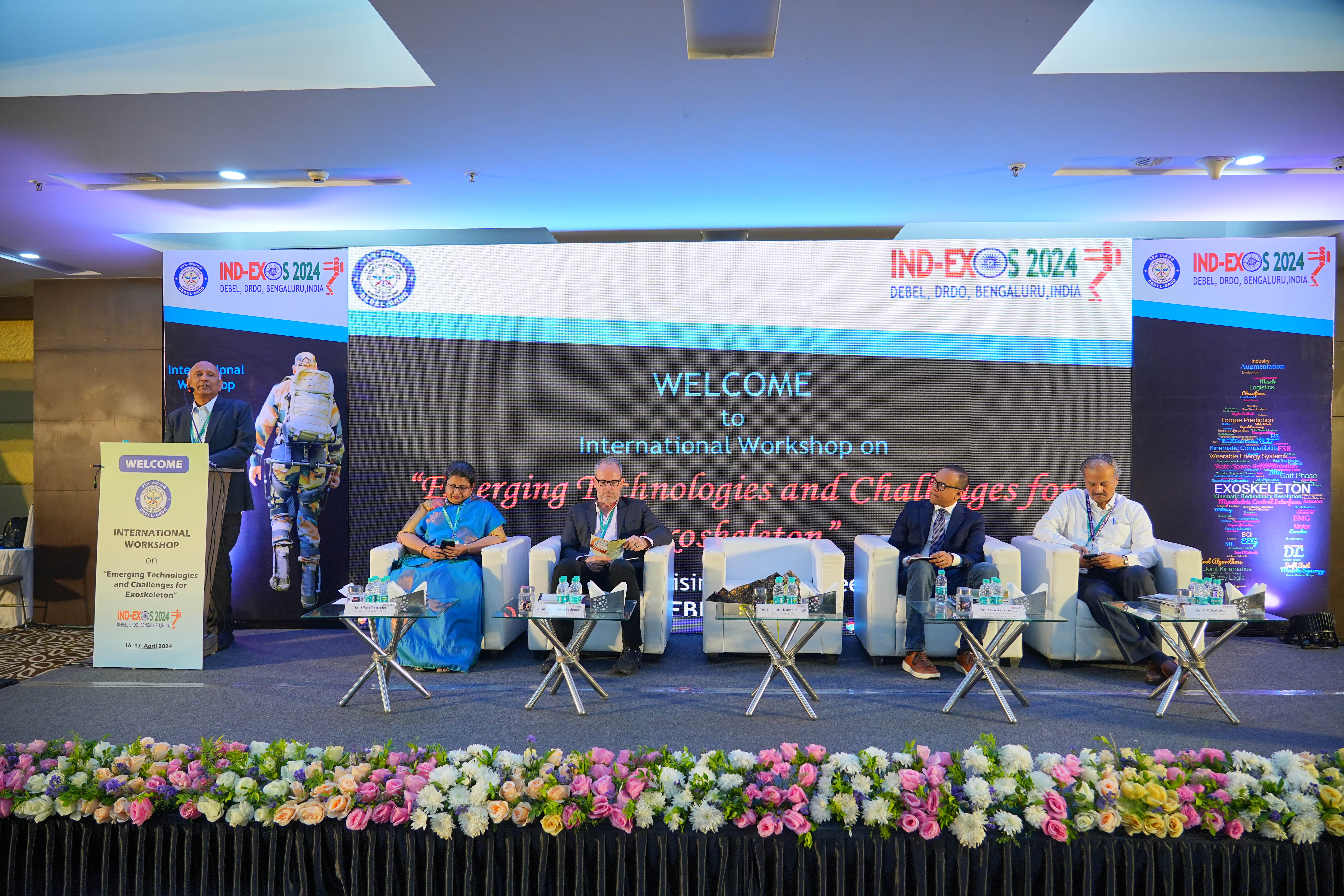
 The first international workshop on ‘Emerging Technologies & Challenges for Exoskeleton’ is being held in Bengaluru on April 16-17, 2024. The workshop, which has been organised by the Defence Bio-Engineering & Electromedical Laboratory of Defence Research & Development Organisation (DRDO), was inaugurated by Secretary, Department of Defence R&D & Chairman DRDO Dr Samir V Kamat, in the presence of Chief of Integrated Defence Staff to the Chairman Chiefs of Staff Committee (CISC) Lt Gen JP Mathew.

In his keynote address, the DRDO Chairman emphasised the importance of the transformational exoskeleton technology and its immense applications in military & civilian environments. He urged the diverse stakeholders including the R&D community, the Armed Forces, industry, and academia to work together to address the challenges and chalk out the roadmap for the future of Exoskeletons.

Speaking on the occasion, the CISC traced back the history of exoskeleton research, its earlier prototypes, and challenges. His address traversed through the challenges which are being currently addressed by the R&D Community. He underscored the significance of exoskeleton technologies in rehabilitation, occupational therapy, and augmentation. He also brought out that the exoskeleton technology being a dual use technology has tremendous commercial potential.

Informative in-depth technical talks were delivered by Prof Robert Reiner of ETH, Zurich and Prof Arun Jayaraman of Northwestern University, Chicago, Illinois. Director General (Life Sciences) Dr UK Singh spoke about the imminent challenges and requirements from the Armed Forces. He urged the community of researchers to collectively address the challenges in their endeavour for future exoskeleton technologies to meet the requirements of all stakeholders.

The two-day workshop is being attended by more than 300 participants from DRDO, Services, Industry, Academia, and Researchers. Exoskeleton technology involves wearable structures which enhance the capabilities of the human body.


********

Read more ...

Latest Posts

5/recent/post-list