Post Page Advertisement [Top]

Summits

 A summit is a high-level meeting that brings together leaders, experts, decision-makers, and key stakeholders to discuss critical issues, set strategic directions, and shape future policies or innovations. Unlike conferences or seminars, which often focus on academic exchange, summits are typically designed for strategic dialogue, collaborative decision-making, and visionary planning on topics of national, international, or sector-specific importance. 


Summits create a structured environment where influential individuals—such as government representatives, industry executives, scholars, and organizational heads—can come together to address pressing challenges or emerging opportunities. Whether the focus is sustainability, technology, education, healthcare, economic development, or global cooperation, summits provide a platform for deep, high-impact discussions that can guide long-term progress.

One of the key characteristics of a summit is its agenda-setting role. The format usually includes keynote addresses, expert panels, roundtable discussions, and strategic sessions aimed at identifying solutions and shaping future directions. Participants engage not only in sharing insights but also in developing frameworks, recommendations, or action plans. As a result, summits often influence policy decisions, industry standards, academic priorities, and collaborative initiatives.

Summits also serve as catalysts for networking and partnership development at the highest level. They offer rare opportunities for leaders and experts to connect directly, exchange perspectives, and explore potential alliances. These relationships can lead to cross-sector collaborations, research partnerships, international agreements, and innovation-driven projects. The connections built at summits often extend far beyond the event itself, contributing to lasting professional and institutional relationships.

Another essential aspect of a summit is its focus on knowledge integration and multi-stakeholder perspectives. Unlike specialized workshops or technical seminars, summits bring together diverse voices from academia, government, industry, civil society, and global organizations. This diversity helps broaden the understanding of complex global issues and encourages comprehensive, inclusive solutions. By encouraging dialogue among participants with different backgrounds and expertise, summits promote holistic thinking and informed decision-making.

Summits also play an important role in public communication and awareness-building. Many summits produce declarations, reports, or communiqués that summarize discussions, outline commitments, and set goals for future action. These documents help communicate outcomes to wider audiences, influencing public debate, guiding institutional priorities, and promoting transparency.

In recent years, the rise of digital technology has led to the emergence of virtual and hybrid summits, making high-level discussions more accessible and cost-effective. Virtual platforms allow participation from global leaders who may not be able to attend in person, while hybrid models combine the richness of face-to-face engagement with the flexibility of online attendance. These formats ensure that summits remain inclusive and relevant in a rapidly changing world.

In conclusion, summits are powerful forums for leadership dialogue, strategic planning, and collaborative problem-solving. They provide a unique space for sharing visions, addressing global and sectoral challenges, and forging pathways toward sustainable development and innovation. Whether conducted physically or virtually, summits play a crucial role in shaping policies, advancing knowledge, and strengthening partnerships for the future.

Read more ...

Workshops

 Workshops are highly interactive, skill-focused learning sessions designed to provide participants with practical knowledge, hands-on experience, and collaborative problem-solving opportunities. Unlike lectures or seminars, which are often more discussion-oriented, workshops emphasize learning by doing, making them a vital component of academic, professional, and technical training environments. 


At their core, workshops aim to equip participants with specific skills or competencies through structured activities, demonstrations, group work, and guided practice. These sessions are typically facilitated by experts, trainers, or practitioners who provide real-world insights and personalized guidance. Because the format is participatory, attendees are not passive listeners; instead, they actively engage with tools, materials, case studies, or software to build practical understanding.

One of the defining features of a workshop is its hands-on approach. Participants may experiment with techniques, analyze scenarios, use technological tools, or work collaboratively to solve challenges. This experiential learning model enhances retention and makes complex concepts easier to grasp. For technical fields—such as engineering, data science, architecture, or digital design—workshops offer invaluable opportunities to practice new methods and stay updated with evolving industry standards.

Workshops also serve as effective platforms for professional development. Organizations, universities, and training institutes conduct workshops to upgrade the skills of their teams, introduce new technologies, or train individuals in best practices. Whether it is a workshop on research methodology, software proficiency, communication skills, or innovation strategies, participants gain actionable knowledge that can be directly applied to their work or studies.

Another significant benefit of workshops is their emphasis on collaboration and peer learning. Small group activities encourage participants to share ideas, discuss challenges, and learn from each other’s experiences. This collective engagement fosters creativity, builds teamwork skills, and often leads to innovative solutions. For students and early-career researchers, workshops provide a supportive environment to ask questions, clarify doubts, and build confidence in their abilities.

Workshops also play an important role in bridging the gap between theory and practice. While traditional academic learning focuses heavily on conceptual understanding, workshops bring those concepts to life through demonstrations and real-world examples. This makes them especially valuable in applied disciplines like management, healthcare, urban planning, and technology, where practical competence is essential.

In academic settings, workshops are increasingly used to support research training. Sessions on literature review techniques, data analysis tools, SPSS, GIS mapping, or academic writing help scholars enhance the quality of their work. These workshops often form part of faculty development programs (FDPs) and student enrichment initiatives.

With the rise of digital platforms, virtual workshops have become widely popular. They offer flexibility, allowing participants from different regions to join without the need for travel. Hybrid workshops—combining online and in-person participation—provide even greater convenience while maintaining interactivity through breakout rooms, shared screens, and collaborative digital tools.

In conclusion, workshops are dynamic learning environments that promote skill development, creativity, and practical problem-solving. Their interactive format ensures that participants gain not only knowledge but also confidence and real-world experience. Whether delivered in person, online, or in a hybrid model, workshops remain an essential method for training, professional growth, and academic advancement.

Read more ...

Seminars

 Seminars are one of the most effective formats for focused knowledge sharing, professional development, and interactive learning within academic and professional communities. Unlike large-scale conferences, seminars typically involve smaller groups and encourage deeper discussion on a specific theme or topic. This intimate structure allows participants to engage more meaningfully with the subject matter and with one another, fostering critical thinking and collaborative learning. 


At their core, seminars are designed to facilitate in-depth exploration of a particular issue, theory, or practice. They may include expert talks, scholarly presentations, demonstrations, or guided discussions. Because of their focused nature, seminars enable participants to examine topics more thoroughly than is often possible in broader academic events. This makes them ideal for addressing emerging research areas, specialized themes, or skill-based training.

One of the greatest strengths of a seminar is its interactive nature. Participants are encouraged to ask questions, share experiences, and contribute actively to the conversation. This creates a dynamic learning environment where knowledge flows not only from presenter to audience but also among the participants themselves. Such exchanges deepen understanding, inspire new perspectives, and help clarify complex concepts. Students, in particular, benefit from seminars as they learn to articulate their thoughts, challenge assumptions, and refine their analytical abilities.

For researchers and professionals, seminars provide valuable opportunities for knowledge enhancement and skill building. Many seminars include technical sessions, hands-on activities, or methodological training that equip attendees with new tools and approaches. Whether it involves learning a statistical method, exploring a new technology, or understanding a theoretical framework, seminars support continuous learning and career advancement.

Seminars also function as platforms for networking and collaboration. Participants from universities, research institutions, industry, and government sectors often come together to discuss shared challenges and opportunities. These interactions can lead to partnerships, joint publications, project collaborations, or mentorship relationships. The smaller scale of seminars makes it easier for attendees to engage directly with experts and peers, building stronger professional connections.

Educational institutions widely use seminars as part of their teaching and learning ecosystem. Faculty members conduct seminars to introduce advanced concepts, discuss case studies, or guide student-led presentations. Such activities promote active learning and help students develop communication skills, critical reasoning, and subject mastery. Seminars also play a crucial role in research training by providing scholars with a space to present their work, receive feedback, and improve their academic writing and presentation skills.

In recent years, virtual and hybrid seminars have become increasingly popular. Online platforms allow institutions to host speakers from around the world, making knowledge exchange more accessible and inclusive. Virtual seminars reduce travel costs and logistical barriers, while hybrid formats combine the benefits of physical engagement with digital flexibility.

In conclusion, seminars are essential academic and professional tools that deepen knowledge, strengthen skills, and promote meaningful interaction. They create enriching environments where ideas can be explored, challenged, and refined. Whether conducted in-person or online, seminars continue to play a vital role in fostering intellectual growth and building strong, informed communities.

Read more ...

Conferences

 Conferences play a vital role in advancing knowledge, fostering collaboration, and shaping the direction of academic and professional fields. They serve as dynamic platforms where researchers, scholars, industry experts, and students come together to exchange ideas, present innovations, and engage with the latest developments in their disciplines. In an era defined by rapid technological change and growing global interconnectivity, conferences have become indispensable for keeping pace with emerging trends and strengthening intellectual communities. 


At their core, conferences provide an opportunity for participants to share their research findings. Presenting a paper or project allows authors to receive constructive feedback from peers, refine their work, and expand its impact. This interactive setting encourages healthy debate, critical thinking, and cross-disciplinary insight—elements that are essential for robust knowledge production. For early-career researchers, the experience of presenting at a conference also builds confidence, communication skills, and visibility in their chosen field.

Beyond presentations, conferences offer networking opportunities that often lead to long-term academic and professional relationships. Attendees may meet potential collaborators, co-authors, mentors, or employers. These connections can result in joint research projects, funded initiatives, or new career pathways. In many cases, significant research breakthroughs and innovative ideas emerge through informal conversations during conference breaks, social gatherings, or panel discussions.

Another key advantage of conferences is their role in professional development. Through workshops, seminars, keynote lectures, and panel discussions, participants gain exposure to new methodologies, tools, and technologies. This continuous learning environment helps individuals strengthen their expertise and adapt to evolving disciplinary standards. For educators, conferences can provide valuable insights into teaching innovations, curriculum design, and emerging pedagogical practices.

Conferences also contribute to the visibility and credibility of institutions and researchers. Publishing conference proceedings with ISBN or DOI enhances the academic value of the event and ensures that presented research becomes part of the global scholarly record. Many universities and organizations rely on conferences to showcase their achievements, attract partnerships, and support their academic branding efforts.

The evolution of digital technology has expanded conference formats to include virtual and hybrid events, making participation accessible to a wider audience. Online platforms reduce travel costs, increase inclusivity, and allow global experts to engage without geographical limitations. Hybrid conferences, combining physical and virtual components, offer even greater flexibility by enabling participation from anywhere in the world while retaining the richness of in-person interaction.

Moreover, conferences stimulate innovation and problem-solving by bringing diverse perspectives together. The exchange of ideas across cultures, regions, and disciplines helps participants understand complex global challenges such as sustainability, healthcare, urban planning, and digital transformation. Collaborative dialogue encourages new approaches and sparks fresh insights that can influence policy, research agendas, and industry standards.

In conclusion, conferences remain a cornerstone of academic and professional growth. They promote learning, inspire innovation, and strengthen global networks. Whether conducted in-person or online, conferences provide invaluable opportunities for individuals and institutions to engage with the broader scholarly community and contribute meaningfully to the advancement of knowledge.

Read more ...

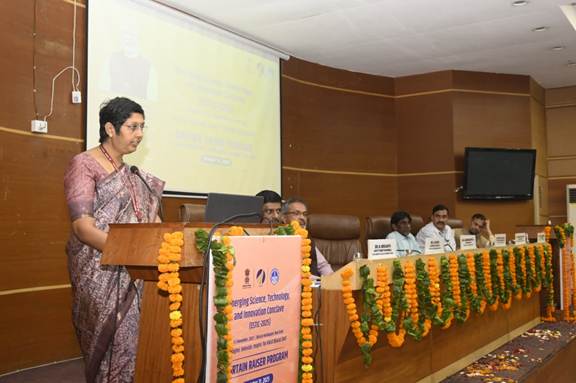
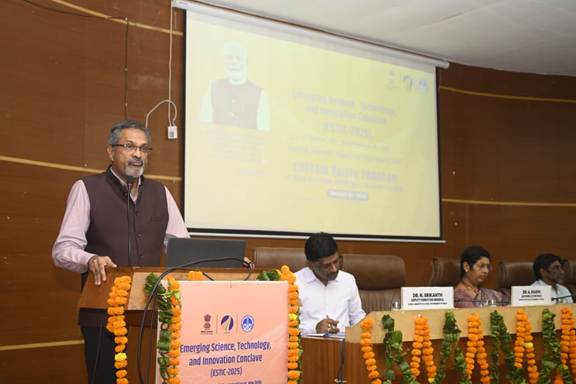
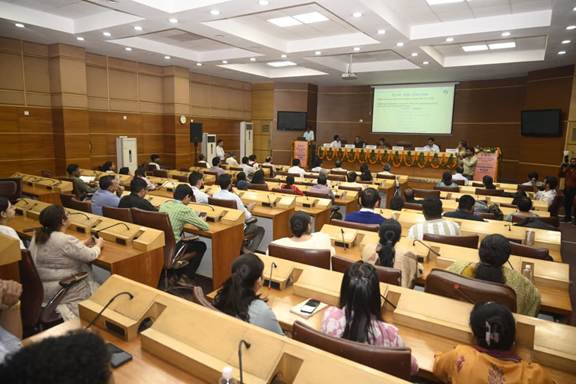
 The Ministry of Ayush today organized a Press Conference to build momentum for its participation in the Emerging Science, Technology, and Innovation Conclave (ESTIC) 2025 at the Central Council for Research in Ayurvedic Sciences (CCRAS) Headquarters located at Janakpuri in New Delhi.

The event was chaired by Smt. Alarmelmangai D, Joint Secretary, Ministry of Ayush, who also showcased a thematic video highlighting the Ministry’s participation in ESTIC 2025.

While addressing the media during the curtain-raiser event, Smt. Alarmelmangai D. emphasized that ESTIC 2025 is a landmark national initiative that celebrates India’s scientific spirit and the power of collaboration. “ESTIC 2025 is not just another event—it is a celebration of India’s innovation ecosystem and a reflection of how science and technology can co-create a healthier, sustainable future. The Ministry of Ayush is proud to contribute to the thematic area of Health and Medical Technologies, which represents the beautiful convergence of India’s traditional health knowledge and cutting-edge modern technology,” she added.

The Joint Secretary also noted that India’s healthcare ecosystem is witnessing a powerful transformation. “While breakthroughs in biomedical engineering, artificial intelligence-based diagnostics, and precision medicine are reshaping modern healthcare, the world is once again turning toward Ayurveda and other Ayush systems for preventive and holistic well-being. Together, these approaches can redefine healthcare for India and the world,” she remarked.

On the technology integration front, the Ministry of Ayush, through its Ayush Grid initiative, has developed a comprehensive suite of digital platforms transforming traditional healthcare into a citizen-centric and globally connected ecosystem. Key systems include the Ayush Hospital Management Information System (A-HMIS) for efficient healthcare delivery, the e-Learning Management System (e-LMS) for digital education and student lifecycle management, the Y-Break App for workplace wellness, the Yoga Portal for holistic Yoga-related resources, and e-Aushadhi and Ayush Suraksha for drug regulation and patient safety. Platforms such as the Ayush Research Portal, Clinical Case Repository, Ayusoft, and NAMASTE Portal are strengthening research, clinical documentation, and standardization efforts nationwide. The Ministry has also expanded its global outreach through tools like the mYoga App (developed in collaboration with WHO) and the Ayush Global Portal, while the PM GatiShakti Ayush Asset Mapping Tool supports infrastructure planning and monitoring across the sector. Further advancing its digital vision, the Ministry is now leveraging AI-based platforms for predictive analysis, literature mining, personalized recommendations, and real-time monitoring—reinforcing its mission to build a data-driven, innovation-led, and globally recognized Ayush digital ecosystem.

Speaking at the event, Dr. A. Raghu, Adviser (Ay), said that ESTIC 2025 provides a national platform to highlight India-centric innovations, point-of-care diagnostics, biomedical technologies, and integrative healthcare solutions. “Our participation in ESTIC reflects the Ministry’s commitment to building a self-reliant, innovation-driven, and globally recognized healthcare ecosystem,” he added. He further noted that the Ministry’s dedicated session on Health and Medical Technologies will demonstrate how traditional systems can synergize with modern biomedical research to develop scalable health innovations for the future.

Dr. Srinivas Rao Chinta, Joint Advisor (H), Ministry of Ayush, made a detailed presentation on the Ministry’s participation in ESTIC 2025, outlining its focus areas under the thematic track of Health & Medical Technologies. He emphasized that the Ayush pavilion and technical sessions will showcase innovative research models, integrative healthcare frameworks, and collaborative projects that bridge traditional medicine with modern scientific innovation.

As a Partner Ministry in ESTIC 2025, the Ministry of Ayush will participate through its dedicated session on Health and Medical Technologies, underscoring the Ministry’s commitment to advancing integrative and innovation-driven healthcare. Scheduled for November 4, 2025, at Bharat Mandapam, New Delhi, the session will be co-chaired by Vaidya Rajesh Kotecha, Secretary, Ministry of Ayush, and Dr. Rajiv Bahl, Secretary, Department of Health Research (DHR) and Director-General, ICMR. It will highlight India’s growing leadership in merging traditional health knowledge with modern science, fostering collaborations across research, industry, and innovation ecosystems.

The session will feature a keynote address by Dr. Shiv Kumar Sarin, Director, Institute of Liver and Biliary Sciences (ILBS), followed by addresses by Prof. Gagandeep Kang (Bill & Melinda Gates Foundation), Prof. Tanuja Nesari (ITRA, Jamnagar), and C. V. Muraleedharan (SCTIMST, Thiruvananthapuram). A panel discussion, moderated by Dr. Jitendra Sharma, Managing Director and Founder-CEO, Andhra Pradesh MedTech Zone, will explore the integration of traditional systems with modern biomedical technologies.

ESTIC 2025 is organized by the Department of Science and Technology (DST) under the guidance of the Office of the Principal Scientific Adviser to the Government of India, ESTIC 2025 will be held from 3rd to 5th November 2025 at Bharat Mandapam, New Delhi, and aims to foster partnerships among government, academia, industry, start-ups, and civil society to accelerate India’s innovation-led growth and advance the vision of Viksit Bharat 2047.

***

Read more ...

Call for Papers – International Journal of Research (IJR)


📢 Call for Papers – International Journal of Research (IJR)

📚 Got Questions? We’ve Got Answers.


❓What is IJR?

The International Journal of Research (IJR) is a monthly, peer-reviewed, open-access journal (ISSN: 2348-6848 Online | 2348-795X Print).
We publish high-quality research across all disciplines and welcome scholars, students, and professionals from around the world.


❓What kind of papers does IJR accept?

We accept:

  • ✅ Research Articles

  • ✅ Review Papers

  • ✅ Case Studies

  • ✅ Short Communications

  • ✅ Conceptual Papers


❓Which subjects are covered?

Almost all major academic fields, including:

  • Science & Technology

  • Engineering & IT

  • Management & Commerce

  • Education & Social Sciences

  • Law & Humanities

  • Medical & Health Sciences

  • Multidisciplinary and Interdisciplinary Research


❓What’s the publication fee?

We believe in accessible publishing.
📌 Open Access Fee: Just $10 per paper
No hidden charges. Includes peer review, DOI, and e-certificate.


❓What are the important deadlines?

🗓 Submission Deadline: 25th of every month
🗓 Publication Date: 30th of the same month
🗓 Review Time: 5–7 working days


❓How do I submit my paper?

Just send your manuscript (in .doc or .docx format) to:
📧 ijr@ijrjournal.com

No registration required. No submission portal. Simple and fast.


❓Will I get a certificate?

Yes! All authors receive a free digital Certificate of Publication, along with a DOI and a permanent link to their paper.


❓Where can I find more details?

Visit our website 👉 www.ijrjournal.com
You’ll find author guidelines, past issues, indexing info, and more.


❓Why should I publish with IJR?

Because we offer:

  • 🌍 Global exposure

  • 🧪 Fast and fair peer review

  • 💸 Affordable publishing

  • 🆓 Open access forever

  • 📜 DOI + certificate at no extra cost

Read more ...

Short-Term Courses on SWAYAM: Empowering Learners with Flexible Learning Opportunities

 SWAYAM (Study Webs of Active-Learning for Young Aspiring Minds) is a national initiative launched by the Government of India with the aim of achieving the goal of education for all by providing an accessible and inclusive platform for learning. Through SWAYAM, students, professionals, and lifelong learners can access a variety of online courses in diverse fields, ranging from academic subjects to vocational skills, personal development, and more. One of the most attractive features of SWAYAM is the availability of short-term courses that allow learners to gain valuable skills, knowledge, and certifications within a short period.


In this article, we will explore the variety and benefits of short-term courses on SWAYAM, how they can be beneficial for learners, and how you can get started with these courses.


What are Short-Term Courses on SWAYAM?

Short-term courses on SWAYAM are specifically designed to provide focused learning in a compact time frame. These courses typically last between 4 to 12 weeks, offering flexible and self-paced learning opportunities. Short-term courses are available across various fields, including but not limited to:

  • Engineering & Technology
  • Humanities & Social Sciences
  • Management
  • Basic & Advanced Sciences
  • Health & Wellness
  • Education & Teaching
  • Arts & Culture
  • Entrepreneurship & Skill Development
  • Computer Science & IT

These courses cater to different types of learners, including students, working professionals, and industry experts looking to upskill or gain new knowledge in a specific area. By completing these short-term courses, learners can improve their competencies, boost their resumes, and enhance their job prospects.


Key Features of Short-Term Courses on SWAYAM

  1. Free Access to Quality Education:

    • The primary goal of SWAYAM is to make high-quality education accessible to everyone. Most of the short-term courses on the platform are free of cost, allowing learners from all backgrounds to take advantage of these educational opportunities.
  2. Self-Paced Learning:

    • Learners can access course materials anytime, anywhere, making it ideal for working professionals or students who may not have the time to commit to traditional classes. Short-term courses are designed for flexible learning, allowing you to complete the course at your own pace.
  3. Variety of Courses:

    • SWAYAM offers a wide range of courses from top Indian universities, colleges, and institutions, ensuring that learners have access to diverse topics and high-quality learning material.
  4. Certificates and Credits:

    • Upon successful completion of a course, learners can receive a certificate endorsed by the institution offering the course. Some courses may also offer academic credits, which can be used toward higher education or further studies.
  5. Interactive Learning Materials:

    • SWAYAM’s short-term courses include a mix of video lectures, quizzes, assignments, and discussion forums to promote interactive learning. The courses are designed to be highly engaging, ensuring that learners can actively participate in the learning process.
  6. Industry-Relevant Content:

    • Many of the short-term courses on SWAYAM are designed in collaboration with industry experts to ensure that the content is relevant and up-to-date. This makes them ideal for individuals looking to upskill or reskill for better job opportunities.
  7. Accessibility for All:

    • SWAYAM is available in multiple languages, ensuring that learners from different regions of India can access the content in their preferred language. The platform also supports learners with disabilities, making education inclusive.

Popular Categories of Short-Term Courses on SWAYAM

SWAYAM offers a broad range of short-term courses across multiple categories, including:

1. Technology and Engineering

  • Introduction to Artificial Intelligence
  • Data Science and Analytics
  • Internet of Things (IoT)
  • Blockchain Technology
  • Machine Learning and Deep Learning
  • Cybersecurity Essentials
  • Cloud Computing

These courses are designed to provide learners with foundational knowledge as well as advanced technical skills needed to excel in today’s digital world. Given the rapid technological advancements, these courses are ideal for individuals looking to gain expertise in high-demand fields.

2. Management and Business

  • Business Communication
  • Project Management Essentials
  • Marketing Management
  • Leadership and Organizational Behavior
  • Financial Management
  • Entrepreneurship

Short-term management courses are perfect for professionals looking to improve their leadership and managerial skills or individuals who want to explore business principles and concepts for career advancement.

3. Health and Wellness

  • Public Health and Hygiene
  • Mental Health and Well-Being
  • Nutrition and Dietetics
  • Yoga and Mindfulness
  • Fitness and Wellness for Professionals

Health-related courses on SWAYAM cover various topics from mental health to physical fitness and nutrition, making them beneficial for health professionals or anyone interested in improving their health and wellness knowledge.

4. Humanities and Social Sciences

  • Psychology and Behavioral Sciences
  • Indian History and Culture
  • Environmental Studies
  • Gender Studies
  • Public Policy and Governance

Humanities courses on SWAYAM allow learners to explore social, cultural, and psychological issues. These short-term courses provide deep insights into human behavior, history, and societal structures, making them valuable for students, researchers, and professionals in social sciences.

5. Science and Technology

  • Physics of Everyday Life
  • Introduction to Biotechnology
  • Environmental Science
  • Astronomy
  • Mathematics for Engineers

For those interested in scientific exploration and technical research, SWAYAM offers foundational courses in Physics, Chemistry, Biology, and Mathematics that are ideal for both beginners and advanced learners.

6. Skill Development

  • Soft Skills for Success
  • Digital Marketing
  • Public Speaking and Communication
  • Graphic Designing
  • Creative Writing

These courses are particularly beneficial for those who want to enhance their professional skills, such as leadership, communication, and teamwork, or those who want to learn new skills that can help them in their career, such as digital marketing or graphic design.


How to Enroll in Short-Term Courses on SWAYAM

Enrolling in a short-term course on SWAYAM is a simple and straightforward process:

  1. Create an Account:

    • Visit the official SWAYAM website https://swayam.gov.in and sign up with your basic details to create an account.
  2. Browse Available Courses:

    • Browse the available courses across different categories and find a short-term course that suits your interests and learning goals.
  3. Enroll in a Course:

    • Once you've selected a course, click on the course details and click the enroll button to register. Some courses may require you to fill out a registration form.
  4. Start Learning:

    • After enrollment, you will have access to the course materials, including video lectures, assignments, and discussion forums.
  5. Complete the Course:

    • Follow the course schedule and complete the course requirements, including any quizzes and assignments.
  6. Get Certified:

    • Upon successfully completing the course, you can receive a certificate. Some courses may offer academic credits or professional certificates that can be used for further education or career advancement.

Benefits of Short-Term Courses on SWAYAM

  • Flexibility: Learners can access courses at their own pace, making it ideal for individuals with busy schedules.
  • Cost-Effective: Many courses are free, reducing the financial burden on learners.
  • Quality Education: The courses are developed by top Indian institutions and experts, ensuring high-quality content.
  • Industry-Relevant Skills: Many of the courses are designed to meet the current needs of the industry, offering valuable skills and certifications.
  • Inclusive Learning: SWAYAM provides an inclusive learning environment for people with disabilities and offers courses in multiple languages.

Conclusion

Short-term courses on SWAYAM offer an exceptional opportunity for individuals to enhance their skills and knowledge in a wide array of fields. Whether you're a student aiming to supplement your academic learning, a professional seeking to upskill, or simply a lifelong learner looking to explore new subjects, SWAYAM provides a diverse range of options that are both accessible and flexible.

Take advantage of the free and high-quality learning resources available on SWAYAM and take the next step in your personal and professional development today!

Read more ...

Latest Posts

5/recent/post-list